
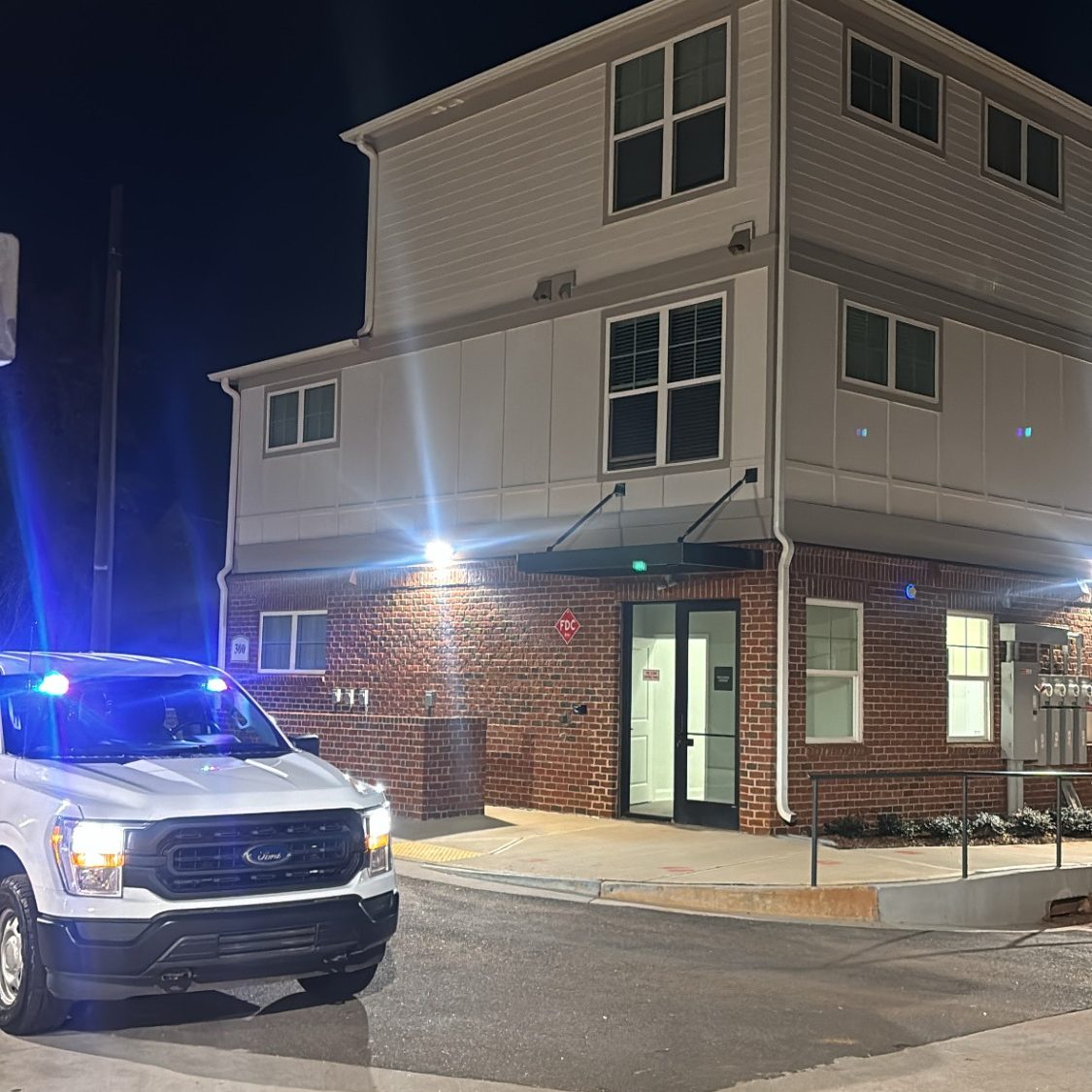
Now Hiring Investigators / Crime Suppression Officers & Sales People
Must be an active peace officer or have 6 years of verifiable security experience.
Applicant Details
Franchise Benefits
Lorem ipsum dolor sit amet, consectetur adipiscing elit.
Centralized Billing
Lorem ipsum dolor sit amet, consectetur adipiscing elit. Nulla euismod condimentum felis vitae efficitur.
Payroll Support
Lorem ipsum dolor sit amet, consectetur adipiscing elit. Nulla euismod condimentum felis vitae efficitur.

Ability to offer Net 30 Terms
Lorem ipsum dolor sit amet, consectetur adipiscing elit. Nulla euismod condimentum felis vitae efficitur.
Low Capital Investment
Lorem ipsum dolor sit amet, consectetur adipiscing elit. Nulla euismod condimentum felis vitae efficitur.

Franchise Opportunities
We currently have territories available in the Carolinas , Georgia , Alabama , Mississippi , Louisiana.
Tagline
Aliquam lorem ante, dapibus in, viverra quis, feugiat a, tellus.
Lorem ipsum dolor sit amet, consectetur adipiscing elit. Nulla euismod condimentum felis vitae efficitur. Sed vel dictum quam, at blandit leo.Lorem ipsum dolor sit amet, consectetur adipiscing elit. Nulla euismod condimentum felis vitae efficitur. Sed vel dictum quam, at blandit leo.Lorem ipsum dolor sit amet, consectetur adipiscing elit. Nulla euismod condimentum felis vitae efficitur. Sed vel dictum quam, at blandit leo.


IMPORTANT DATA
Expanded Legal Authority, Public Safety Duties & Use-of-Force Standards
SOUTHERN PUBLIC SAFETY GROUP
SUBCONTRACTOR & CONTRACTOR POLICY MANUAL
Expanded Legal Authority, Public Safety Duties & Use-of-Force Standards
(Georgia-Compliant | Private Sector |
1. DESIGNATION AS PUBLIC SAFETY OFFICERS (PRIVATE SECTOR)
All subcontractors and contractors operating under Southern Public Safety Group are designated Private-Sector Public Safety Officers for purposes of contractual duty, training expectations, and liability standards.
1.1 Definition
A Public Safety Officer (Private Sector) is a trained security professional whose role includes:
Crime deterrence and suppression
Life safety and emergency response
Protection of persons on client property
Incident stabilization until public emergency services arrive
This designation does not confer sworn law-enforcement authority, arrest powers beyond those permitted to private persons, or governmental status.
2. DUTY TO RENDER AID (ON CLIENT PROPERTY)
2.1 General Duty
While on duty and on client-controlled property, all SPSG Public Safety Officers shall render reasonable aid when:
A person is injured
A medical emergency is apparent
A use-of-force incident occurs
A subject is exposed to OC spray, TASER/CED, or physical force
Aid must be rendered within the scope of the officer’s training, without exceeding certification or skill level.
2.2 Scope of Medical Aid
Officers may provide:
Basic first aid
Bleeding control
CPR / AED (if certified)
Naloxone (Narcan), if trained and issued
Decontamination guidance after OC exposure
Continuous monitoring of subjects after force
🚫 Officers shall not perform advanced medical procedures outside training.
2.3 Georgia Legal Basis – Duty to Act
While Georgia does not impose a universal “Good Samaritan duty,” private security professionals assume a duty of care once:
They initiate contact
They exercise control or restraint
They use force
They contractually assume safety responsibilities
Failure to render aid after creating or controlling a situation may expose the officer and company to negligence and wrongful death claims.
Relevant Georgia Case Law (Duty & Care)
City of Rome v. Jordan, 263 Ga. 26 (1993)
→ Once control is exercised, a duty of reasonable care attaches.
Westmoreland v. Brown, 883 F.2d 1554 (11th Cir. 1989)
→ Failure to provide aid after force or restraint may constitute deliberate indifference.
Glass v. City of Atlanta, 247 Ga. App. 501 (2001)
→ Use of force creates an obligation to monitor and respond to medical distress.
These principles apply equally to private security acting in a public safety role.
3. GEORGIA USE-OF-FORCE LEGAL FRAMEWORK (PRIVATE PERSONS)
3.1 Governing Statutes
O.C.G.A. § 16-3-21 – Self-Defense
A person is justified in using force when they reasonably believe it is necessary to defend against the imminent use of unlawful force.
O.C.G.A. § 16-3-23 – Defense of Habitation / Property
Use of force may be justified to prevent violent entry or felony conduct—but deadly force is heavily restricted.
O.C.G.A. § 16-3-24 – Use of Force in Making a Citizen’s Arrest
Private persons may use reasonable force to detain someone committing an offense in their presence, but deadly force is almost never justified.
3.2 Private Security Standard
Because SPSG personnel operate professionally and under contract, courts will hold them to a higher standard than ordinary civilians.
Force must be:
Objectively reasonable
Proportional
Necessary
Immediately defensible in court
4. TASER / CONDUCTED ENERGY DEVICE (CED) POLICY
4.1 Authorization
Only officers who are:
Documented as trained
Certified by an approved provider
Expressly authorized by SPSG
may carry or deploy a TASER/CED.
4.2 Authorized Use
A TASER/CED may be used only when:
A subject is actively assaultive
A subject poses an immediate threat of bodily harm
Lesser force options have failed or are unsafe
The deployment is defensive, not punitive
4.3 Prohibited Use
TASER/CEDs shall not be used:
On passive resistance only
As punishment or compliance tool
On handcuffed or restrained subjects
On visibly pregnant persons
On elderly or medically fragile persons unless deadly threat exists
On persons in elevated positions (fall risk)
4.4 Post-Deployment Requirements
After any TASER/CED use:
Immediately render medical aid
Monitor breathing and consciousness
Remove probes if trained or secure EMS
Document incident in full
Preserve device data
5. OC SPRAY (OLEORESIN CAPSICUM) POLICY
5.1 Authorized Use
OC spray may be used when:
A subject is actively aggressive
There is risk of assault
Distance is needed to disengage safely
Physical force would increase injury risk
5.2 Prohibited Use
OC spray shall not be used:
On compliant individuals
In confined spaces without ventilation unless unavoidable
As crowd punishment
On restrained individuals
5.3 Decontamination & Aid
Officers must:
Provide verbal decontamination instructions
Offer water and airflow
Monitor for respiratory distress
Summon EMS if distress persists
Failure to provide decontamination is a major liability exposure.
6. HAND-ON FORCE & CONTROL TECHNIQUES
6.1 Permitted
Defensive blocking
Escort holds
Balance displacement
Ground stabilization (no neck pressure)
6.2 Prohibited
Chokeholds or neck restraints
Pressure on airway or spine
Knee-on-neck
Strikes to head unless deadly force justified
7. DEADLY FORCE (EXTREMELY LIMITED)
Deadly force is justified only when:
The officer reasonably believes there is an imminent threat of death or serious bodily injury
No lesser option exists
The threat is immediate and unavoidable
Deadly force will always trigger:
Immediate suspension
Independent investigation
Legal review
Insurer notification
8. FAILURE TO RENDER AID – DISCIPLINARY CONSEQUENCES
Failure to render aid when required may result in:
Immediate termination
Contract cancellation
Personal civil liability
Loss of indemnification
Referral to licensing authorities
9. ACKNOWLEDGMENT OF PUBLIC SAFETY DUTY
All contractors must acknowledge that:
They are functioning as Public Safety Officers
They have a duty to render aid on client property
They understand Georgia use-of-force law
They accept personal responsibility for violations
ACKNOWLEDGMENT
I acknowledge that I am designated as a Private-Sector Public Safety Officer while working under Southern Public Safety Group and agree to comply with all use-of-force, medical aid, and professionalism policies.